
Creativity, Inc. by Ed Catmull and Amy Wallace - A Summary
Ed Catmull and Amy Wallace reveal how Pixar built a culture where candid feedback, smart risk-taking, and strong teams turn fragile ideas into extraordinary creative work.
BUSINESS BOOK SUMMARIES
7/1/20266 min read
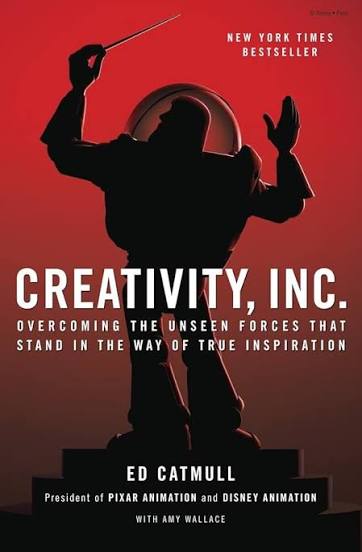
CREATIVITY, INC.
Author: Ed Catmull and Amy Wallace
The Big Idea in 30 Seconds
Ed Catmull is a cofounder of Pixar and former president of Pixar and Walt Disney Animation Studios, while Amy Wallace is a journalist and author who writes about leadership, culture, and creative work.
In Creativity, Inc., the central idea is that creative success doesn’t come from finding one brilliant idea and protecting it from criticism. It comes from building a culture where talented people can speak honestly, expose problems early, and improve weak ideas without fear.
The book’s argument is practical: leaders can’t remove uncertainty from creative work, but they can create conditions where people take smart risks, share unfinished thinking, learn from failure, and solve problems together.
The Insight in Plain English
Great ideas usually begin as weak, incomplete ideas.
That means companies shouldn’t judge every early concept as though it were a finished product. They should give promising ideas enough support, honest feedback, and time to become stronger. Creative work improves through many rounds of testing, criticism, revision, and problem-solving.
This matters because employees often hide problems when they fear embarrassment, punishment, or office politics. Leaders may then discover those problems after too much time and money have been spent. A healthy creative culture makes it safer to tell the truth while there’s still time to improve the work.
Core Concepts / Frameworks / Examples
The Braintrust uses candor to improve the work.
Pixar’s Braintrust brings experienced people together to review a project and give direct feedback. The group doesn’t take control from the project leader or issue commands. Its job is to identify problems, ask useful questions, and help the team see weaknesses it may be too close to notice.
Early ideas need protection and pressure.
The book compares new ideas to “ugly babies” because they’re often awkward, fragile, and easy to dismiss. Leaders should protect an idea long enough for it to develop, but protection shouldn’t mean avoiding criticism. The goal is to give the idea both support and honest pressure.
Candor is more useful than forced agreement.
Creative teams need people who can question assumptions, challenge weak choices, and raise concerns without damaging relationships. Candor isn’t permission to be rude. It’s a shared commitment to improving the work rather than protecting status, comfort, or ego.
Failure should create information.
Some failures come from poor preparation, but others are part of testing something new. Leaders should separate careless mistakes from useful experiments. When a thoughtful attempt fails, the team should study what happened and use the information to make the next version better.
Good teams matter more than perfect ideas.
A strong team can take a weak idea and improve it, while a weak team can damage a promising idea. Hiring talented people matters, but so do trust, collaboration, clear ownership, and the freedom to challenge one another. Creative success is usually a team achievement.
How to Apply This to Your Business
Start by making unfinished work easier to share. Employees often wait too long because they believe every idea must look polished before anyone sees it. Create regular checkpoints where teams can show drafts, rough concepts, early prototypes, or incomplete plans without pretending the work is finished.
Next, separate feedback from authority. A review group should help the owner of the work see problems more clearly, but it shouldn’t automatically take control. The person responsible for the project should remain responsible for deciding what to change unless the business faces a serious legal, financial, or safety risk.
Create a small Braintrust for important projects. Choose people with relevant experience, good judgment, and the ability to speak honestly without turning the meeting into a performance. Include different viewpoints, but don’t make the group so large that useful discussion becomes slow or political.
Set rules for useful criticism. Feedback should focus on the work, explain the concern, and give enough detail to be useful. “I don’t like it” isn’t helpful. “The customer problem isn’t clear until the third page, so the opening may lose attention” gives the team something it can examine.
Teach employees to identify problems without demanding their preferred solution. People sometimes weaken feedback by insisting that their fix is the only answer. A reviewer may correctly see that a proposal is confusing but suggest the wrong repair. Separate the diagnosis from the solution so the project owner can consider several options.
Ask leaders to speak last. When the highest-ranking person gives an opinion first, others often adjust their comments to match it. Let the people closest to the work speak before executives do. This increases the chance that leaders will hear what the team actually thinks.
Protect early ideas from premature judgment. Don’t compare a rough first version with a competitor’s finished product. Decide whether the idea solves a worthwhile problem, contains something promising, and deserves another round of development. Judge its direction before judging its polish.
At the same time, don’t protect weak ideas forever. Set review points where the team must show what it has learned, what has improved, and what remains uncertain. Support should help an idea develop, not allow a project to continue without evidence or discipline.
Make it safe to raise bad news early. Reward employees who identify risks before they become expensive.
When someone reveals a problem, begin with curiosity instead of blame. Ask what happened, what the team knows, what it still needs to learn, and what decision must be made next.
Review failures based on how they happened. A failed test that produced useful knowledge is different from a missed deadline caused by poor communication. Use different responses. Useful experiments should lead to learning, while preventable failures should lead to clearer standards, better preparation, or stronger accountability.
Build short learning loops. Don’t wait until the end of a large project to discover whether the idea works. Use prototypes, customer interviews, pilot programs, draft reviews, and small tests. Faster feedback reduces the cost of being wrong.
Watch for meeting behavior that weakens candor. If the same people dominate every discussion, junior employees stop contributing, or leaders punish disagreement, honest feedback will disappear. Use direct invitations, smaller groups, anonymous input, or written comments when necessary.
Give people permission to challenge the process. A company can become attached to systems that once worked but now slow the team down. Ask employees which rules, approvals, reports, or meetings are reducing quality without protecting anything important.
Hire for collaboration as well as skill. A brilliant employee who refuses feedback or damages trust can weaken the entire group. Look for people who can defend an idea, reconsider it, improve someone else’s work, and separate their identity from the success of one proposal.
Protect ownership. Creative people need to feel responsible for the work, not merely assigned to execute someone else’s opinion. Give teams clear goals and limits, then let them make meaningful decisions within those boundaries.
Reduce fear through leader behavior. Employees study how leaders react when a project struggles. If leaders become angry, look for someone to blame, or hide mistakes from senior management, the team will learn to protect itself. If leaders remain honest, curious, and focused on solving the problem, employees are more likely to do the same.
Make post-project reviews normal. After a launch, campaign, product, or major decision, review what worked, what failed, what surprised the team, and what should change. Record the lessons so they improve future work instead of disappearing when the team moves on.
Finally, remember that culture requires maintenance. Candor can weaken as companies grow, new managers arrive, and successful teams become protective of their methods. Leaders need to keep asking where people feel unable to speak, which problems are being hidden, and what success may be preventing the company from seeing clearly.
To read about money - https://powerwithmoney.com/
To read business book summaries - https://powerwithmoney.com/business-book-summaries
To read primary school compositions: https://sgessays.com/singapore-primary-school-compositions
To read secondary school essays: https://sgessays.com/singapore-secondary-school-essays
To read general papers essays: https://sgessays.com/general-paper-essays
To read tips on improving compositions/essays :https://sgessays.com/tips-to-improve-esssays-compositions
To read sample of letters,emails and reports (Situational Writing) - https://sgessays.com/situational-writing
To visit our main website : https://sgessays.com/
PSLE themed compositions - https://sgessays.com/100-theme-based-compositions
PSLE Continuous writing Compositions - https://sgessays.com/continuous-writing-compositions-examples
PSLE Situational writing - https://sgessays.com/situational-writing-compositions-examples
PSLE Listening comprehension - https://sgessays.com/primary-6-psle-listening-comprehension
PSLE Oral examination - https://sgessays.com/psle-english-oral-examinations
Secondary School Narrative essays - https://sgessays.com/narrative-essays
Secondary School Exposition essays https://sgessays.com/expository-essays
Secondary School Argumentative essays- https://sgessays.com/argumentative-essays
Secondary School Reflective essays - https://sgessays.com/reflective-essays
Secondary School Descriptive Essays https://sgessays.com/descriptive-essays
Junior College General Papers - https://sgessays.com/general-paper-essays
To read thrilling and bone chilling ghost stories visit : https://asiaghosts.com/
To read ghost stories related to houses/HDB: https://asiaghosts.com/house/
To read ghost stories related to school: https://asiaghosts.com/schools/
To read stories related to strange incidents : https://asiaghosts.com/strange-incidents/
To download free exam papers - https://singaporeexampapers.com/
To download free kids movies - https://www.singaporeexampapers.com/kids-movies
To download summary notes for english,math and science subjects - https://www.singaporeexampapers.com/subject-based-summary-notes
To download worksheets and resources for relief classes - https://www.singaporeexampapers.com/relief-teacher-worksheets-and-resources
To download topic based papers - https://www.singaporeexampapers.com/topic-based-practice-papers
To download subject based crossword puzzles - https://www.singaporeexampapers.com/subject-based-crossword-puzzles
To read tips and advice for Singapore exams - https://www.singaporeexampapers.com/tips-and-advice
To practice various subjects quizzes - https://www.singaporeexampapers.com/quizzes