
Deep Work by Cal Newport - A Summary
Cal Newport shows why the ability to work without distraction has become a rare competitive advantage—and how protecting your attention can produce better work in less time.
BUSINESS BOOK SUMMARIES
7/1/20265 min read
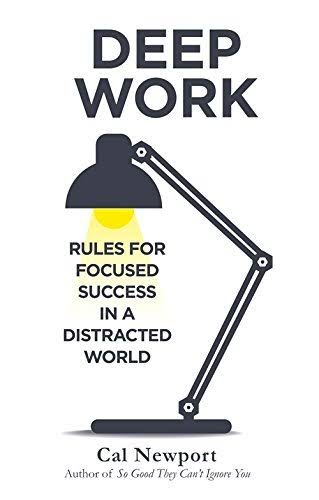
DEEP WORK
Author: Cal Newport
The Big Idea in 30 Seconds
Cal Newport is a computer science professor, bestselling author, and workplace thinker who studies how people can produce valuable work in a distracted world.
In Deep Work, the central idea is that the ability to focus without distraction is becoming both rarer and more valuable. People who can concentrate on difficult work, learn complex skills, and produce at a high level will have a major advantage.
The book’s argument is simple: attention is a business asset. Protect it from constant messages, meetings, notifications, and low-value tasks, and you can create better results in less time.
The Insight in Plain English
Being busy isn’t the same as being productive.
A day filled with email, meetings, messages, and small requests can feel exhausting without producing anything important. Deep work is focused effort on a demanding task that creates real value. Shallow work is necessary but lower-value activity that usually doesn’t require much concentration.
This matters because many workplaces reward visible activity instead of meaningful output. Employees answer quickly, attend every meeting, and stay available all day, but they rarely get enough uninterrupted time to solve hard problems, develop valuable skills, or complete their best work.
If this idea resonated with you, share it with your network using the social sharing buttons at the top of this post.
Core Concepts / Frameworks / Examples
Deep work creates rare value.
Deep work includes activities such as writing a strategy, solving a technical problem, designing a product, analyzing difficult data, or learning a valuable skill. These tasks require concentration and often produce results that are hard for competitors to copy.
Shallow work can quietly take over.
Shallow work includes routine email, status updates, simple administration, and meetings that don’t require much thought. Some of it is necessary, but it expands when leaders don’t set limits. A full calendar can hide the fact that important work isn’t getting done.
Attention residue weakens performance.
When you switch from one task to another, part of your attention remains stuck on the first task. Moving constantly between email, messages, calls, and focused work makes it harder to think clearly, even when each interruption seems small.
Boredom strengthens concentration.
If you reach for your phone whenever nothing is happening, your brain becomes trained to expect constant stimulation. Practicing moments without entertainment helps rebuild the ability to stay with one demanding task instead of escaping at the first sign of discomfort.
Depth needs structure.
Deep work rarely happens by accident. It requires scheduled time, clear goals, fewer distractions, and rules about when communication can interrupt. A reliable system makes focus easier than depending on willpower every day.
How to Apply This to Your Business
Start by identifying the work that creates the most value. Ask which activities improve products, solve customer problems, build useful knowledge, increase revenue, reduce major costs, or create an advantage competitors can’t easily copy. Those tasks should receive the team’s best attention.
Next, separate deep work from shallow work. Review a typical week and label each major activity. Writing a proposal, solving a difficult operating problem, or building a new product may require depth. Routine email, basic reporting, and many status meetings are usually shallow. The goal isn’t to remove all shallow work. It’s to stop it from consuming the entire day.
Schedule focused work before the calendar fills. Block specific periods for demanding tasks and protect them like important meetings. A two-hour block three times a week can produce more value than waiting for a free afternoon that never appears.
Give every focus block a clear goal. “Work on strategy” is too vague. “Draft the three strategic priorities for next quarter” gives the session a finish line. Clear goals reduce the time wasted deciding what to do.
Reduce task switching. Group similar activities together instead of checking them throughout the day.
Answer email at planned times. Review reports in one block. Hold related meetings close together. Fewer switches leave more attention available for important work.
Create communication rules. Constant availability makes deep work almost impossible. Decide which situations truly require an immediate response, which channels should be used for urgent issues, and when employees are expected to check routine messages.
Shorten the path to focused work. Close unused tabs, silence notifications, remove the phone from reach, and prepare the files or information you’ll need before starting. Small barriers matter because every distraction creates another chance to abandon the task.
Review recurring meetings. Ask whether each meeting needs to happen, whether everyone needs to attend, and whether the same result could be reached through a short written update. A weekly meeting that wastes an hour for ten people consumes ten hours of company time.
Train managers to measure output, not responsiveness. Fast replies can create the appearance of productivity while serious work remains unfinished. Judge employees by the quality and value of what they produce, not by how quickly they answer every message.
Make concentration part of the culture. Leaders can’t demand thoughtful work while interrupting employees all day. Managers should respect focus blocks, send clearer requests, reduce unnecessary meetings, and avoid treating every issue as urgent.
Help employees build the skill gradually. Someone used to constant interruption may struggle to focus for several hours immediately. Begin with shorter blocks, such as 30 or 45 minutes, and increase them as concentration improves.
Practice being unavailable to stimulation. Leave the phone behind during a short walk, wait in line without opening an app, or take a break without checking messages. These small moments help train the brain to tolerate boredom instead of demanding constant input.
Set a limit on shallow work. Decide how much of the week should be spent on administration, meetings, and routine communication. When shallow work goes beyond that limit, review what can be removed, delegated, automated, shortened, or grouped together.
Use a shutdown routine at the end of the day. Review unfinished work, record the next actions, check tomorrow’s calendar, and decide what matters most next. This clears mental clutter and makes it easier to begin the next day with direction.
Finally, protect recovery. Deep concentration is demanding, and people can’t maintain it every waking hour.
Clear stopping times, breaks, sleep, and time away from work help restore the ability to think well the next day.
To read about money - https://powerwithmoney.com/
To read business book summaries - https://powerwithmoney.com/business-book-summaries
To read primary school compositions: https://sgessays.com/singapore-primary-school-compositions
To read secondary school essays: https://sgessays.com/singapore-secondary-school-essays
To read general papers essays: https://sgessays.com/general-paper-essays
To read tips on improving compositions/essays :https://sgessays.com/tips-to-improve-esssays-compositions
To read sample of letters,emails and reports (Situational Writing) - https://sgessays.com/situational-writing
To visit our main website : https://sgessays.com/
PSLE themed compositions - https://sgessays.com/100-theme-based-compositions
PSLE Continuous writing Compositions - https://sgessays.com/continuous-writing-compositions-examples
PSLE Situational writing - https://sgessays.com/situational-writing-compositions-examples
PSLE Listening comprehension - https://sgessays.com/primary-6-psle-listening-comprehension
PSLE Oral examination - https://sgessays.com/psle-english-oral-examinations
Secondary School Narrative essays - https://sgessays.com/narrative-essays
Secondary School Exposition essays https://sgessays.com/expository-essays
Secondary School Argumentative essays- https://sgessays.com/argumentative-essays
Secondary School Reflective essays - https://sgessays.com/reflective-essays
Secondary School Descriptive Essays https://sgessays.com/descriptive-essays
Junior College General Papers - https://sgessays.com/general-paper-essays
To read thrilling and bone chilling ghost stories visit : https://asiaghosts.com/
To read ghost stories related to houses/HDB: https://asiaghosts.com/house/
To read ghost stories related to school: https://asiaghosts.com/schools/
To read stories related to strange incidents : https://asiaghosts.com/strange-incidents/
To download free exam papers - https://singaporeexampapers.com/
To download free kids movies - https://www.singaporeexampapers.com/kids-movies
To download summary notes for english,math and science subjects - https://www.singaporeexampapers.com/subject-based-summary-notes
To download worksheets and resources for relief classes - https://www.singaporeexampapers.com/relief-teacher-worksheets-and-resources
To download topic based papers - https://www.singaporeexampapers.com/topic-based-practice-papers
To download subject based crossword puzzles - https://www.singaporeexampapers.com/subject-based-crossword-puzzles
To read tips and advice for Singapore exams - https://www.singaporeexampapers.com/tips-and-advice
To practice various subjects quizzes - https://www.singaporeexampapers.com/quizzes