
Drive by Daniel Pink - A Summary
Daniel Pink shows why autonomy, mastery, and purpose motivate people more powerfully than the usual mix of rewards, pressure, and punishment.
BUSINESS BOOK SUMMARIES
7/1/20265 min read
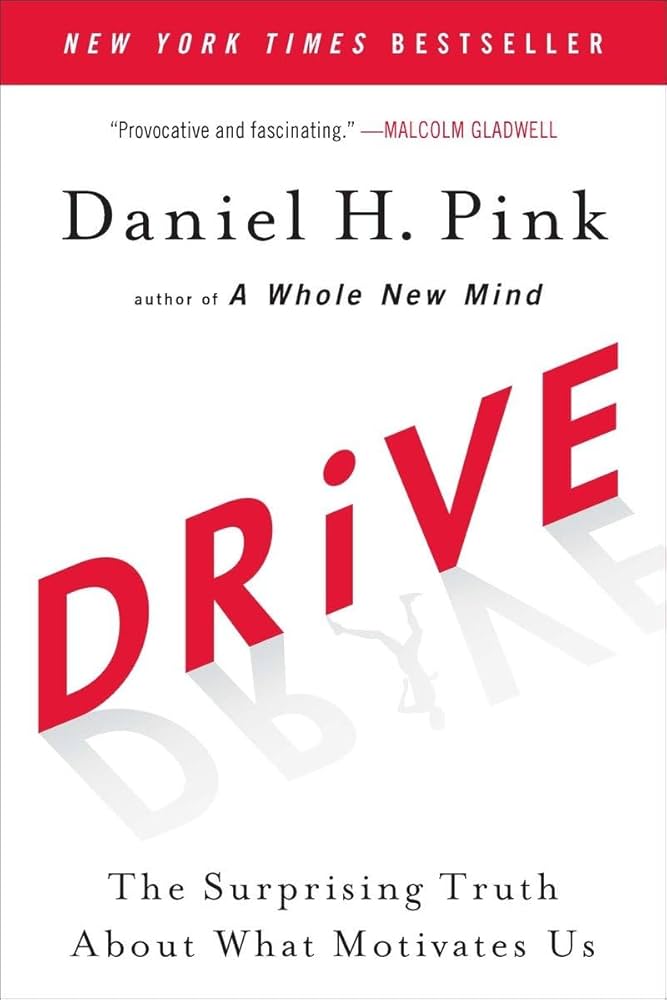
DRIVE
Author: Daniel Pink
The Big Idea in 30 Seconds
Daniel Pink is a bestselling author and workplace thinker who studies motivation, behavior, creativity, and how people perform at their best.
In Drive, the central idea is that rewards and punishments aren’t enough to motivate people doing complex, creative, or meaningful work. Once people are paid fairly, stronger motivation often comes from autonomy, mastery, and purpose.
The book’s argument is practical: people perform better when they have some control over their work, can see themselves improving, and understand why their effort matters. Leaders who rely too heavily on bonuses, pressure, and close control may get short-term compliance while weakening long-term performance.
The Insight in Plain English
Money matters, especially when pay is unfair or too low. But after basic fairness is established, more pressure and bigger rewards don’t always create better work.
Rewards can help with simple, routine tasks where the goal and method are clear. But for work that requires judgment, creativity, learning, or problem-solving, narrow rewards can cause people to focus only on the prize. They may take shortcuts, ignore useful information, or lose interest in the work itself.
This matters because modern businesses need more than obedience. They need employees who notice problems, improve systems, learn new skills, and make good decisions without waiting for constant instructions. That requires a workplace designed around internal motivation, not just external pressure.
Core Concepts / Frameworks / Examples
Autonomy gives people meaningful control.
Autonomy means having some choice over what you work on, how you do it, when you do it, or who you work with. It doesn’t mean removing standards or accountability. It means giving capable people room to make decisions instead of controlling every step.
Mastery is the desire to keep improving.
People are often motivated by work that challenges them without overwhelming them. Mastery grows when employees can practice useful skills, receive clear feedback, see progress, and take on harder work as their ability increases.
Purpose connects effort to something larger.
People work harder and think more carefully when they understand why the work matters. Purpose may come from helping customers, improving an industry, supporting a team, or building something useful. Leaders should connect daily tasks to real outcomes instead of relying on empty mission statements.
“If-then” rewards have limits.
An if-then reward says, “If you do this, then you’ll receive that.” This can work for routine tasks, but it may weaken creativity and ownership when applied to complex work. People can become focused on earning the reward instead of solving the problem well.
Type I behavior is driven from within.
The book contrasts people motivated mainly by external rewards with people driven by interest, growth, and meaning. Type I behavior doesn’t mean money is unimportant. It means people are more likely to do excellent work when they also find value in the work itself.
How to Apply This to Your Business
Start by making sure compensation is fair. Autonomy and purpose won’t fix underpayment, unclear bonuses, or rewards that feel political. Pay people enough to reduce anxiety about fairness, then improve the work itself.
Next, review where your company uses rewards. Ask whether each task is routine or complex. A clear bonus may help with repetitive work that has a simple target. But creative work, strategy, product development, management, and problem-solving usually need broader goals and more freedom.
Give people more autonomy without removing accountability. Define the result, deadline, budget, and important limits, then let the employee help decide how to reach the goal. Managers should provide context and support without controlling every action.
You can expand autonomy in small ways. Let employees choose the order of tasks, suggest better tools, design part of a process, select a learning project, or decide how to present their work. Even limited choice can increase ownership.
Create clear paths toward mastery. Break important skills into levels so people know what improvement looks like. Give them challenging assignments, useful feedback, practice, coaching, and time to reflect on what they’ve learned.
Match difficulty to ability. Work that’s too easy becomes boring, while work that’s far beyond someone’s current skill creates frustration. The best assignments stretch people enough to require growth without making success feel impossible.
Make progress visible. Large goals can feel distant, so track smaller signs of improvement. That might include faster project delivery, better customer ratings, fewer errors, stronger presentations, or successful use of a new skill. Visible progress helps people stay engaged.
Connect each role to a real purpose. Don’t stop at a general statement about changing the world. Show employees how their work affects customers, coworkers, costs, quality, safety, or growth. A customer support team should understand how its work protects trust. An operations team should see how better systems reduce frustration and waste.
Explain the reason behind decisions. People are more likely to accept limits when they understand the business need. Instead of saying, “This is the new process,” explain what problem it solves, what result it should produce, and where employees still have room to make choices.
Replace some performance goals with learning goals. A performance goal might be to close ten accounts. A learning goal might be to improve discovery calls, test three approaches, and document what produces better conversations. Learning goals help people build skills that improve future results.
Be careful with public rankings and contests. They may energize a few employees while discouraging others or creating unhealthy competition. Use them only when they support teamwork, fairness, and the real goal of the work.
Ask employees what would make their work more motivating. Some may want more freedom, while others want clearer feedback, better tools, stronger coaching, or a clearer connection to customers. Motivation isn’t identical for everyone, so leaders need to listen.
Finally, judge managers by the environment they create, not only the numbers their teams produce. A manager who reaches a target by exhausting people, controlling every detail, or encouraging shortcuts may damage future performance. Strong managers create results while helping people become more capable, responsible, and engaged.
To read about money - https://powerwithmoney.com/
To read business book summaries - https://powerwithmoney.com/business-book-summaries
To read primary school compositions: https://sgessays.com/singapore-primary-school-compositions
To read secondary school essays: https://sgessays.com/singapore-secondary-school-essays
To read general papers essays: https://sgessays.com/general-paper-essays
To read tips on improving compositions/essays :https://sgessays.com/tips-to-improve-esssays-compositions
To read sample of letters,emails and reports (Situational Writing) - https://sgessays.com/situational-writing
To visit our main website : https://sgessays.com/
PSLE themed compositions - https://sgessays.com/100-theme-based-compositions
PSLE Continuous writing Compositions - https://sgessays.com/continuous-writing-compositions-examples
PSLE Situational writing - https://sgessays.com/situational-writing-compositions-examples
PSLE Listening comprehension - https://sgessays.com/primary-6-psle-listening-comprehension
PSLE Oral examination - https://sgessays.com/psle-english-oral-examinations
Secondary School Narrative essays - https://sgessays.com/narrative-essays
Secondary School Exposition essays https://sgessays.com/expository-essays
Secondary School Argumentative essays- https://sgessays.com/argumentative-essays
Secondary School Reflective essays - https://sgessays.com/reflective-essays
Secondary School Descriptive Essays https://sgessays.com/descriptive-essays
Junior College General Papers - https://sgessays.com/general-paper-essays
To read thrilling and bone chilling ghost stories visit : https://asiaghosts.com/
To read ghost stories related to houses/HDB: https://asiaghosts.com/house/
To read ghost stories related to school: https://asiaghosts.com/schools/
To read stories related to strange incidents : https://asiaghosts.com/strange-incidents/
To download free exam papers - https://singaporeexampapers.com/
To download free kids movies - https://www.singaporeexampapers.com/kids-movies
To download summary notes for english,math and science subjects - https://www.singaporeexampapers.com/subject-based-summary-notes
To download worksheets and resources for relief classes - https://www.singaporeexampapers.com/relief-teacher-worksheets-and-resources
To download topic based papers - https://www.singaporeexampapers.com/topic-based-practice-papers
To download subject based crossword puzzles - https://www.singaporeexampapers.com/subject-based-crossword-puzzles
To read tips and advice for Singapore exams - https://www.singaporeexampapers.com/tips-and-advice
To practice various subjects quizzes - https://www.singaporeexampapers.com/quizzes