
How Google Works by Eric Schmidt, Jonathan Rosenberg, and Alan Eagle - A Summary
Eric Schmidt, Jonathan Rosenberg, and Alan Eagle reveal how Google used smart talent, rapid decisions, and a strong culture to keep innovation moving at scale.
BUSINESS BOOK SUMMARIES
7/1/20264 min read
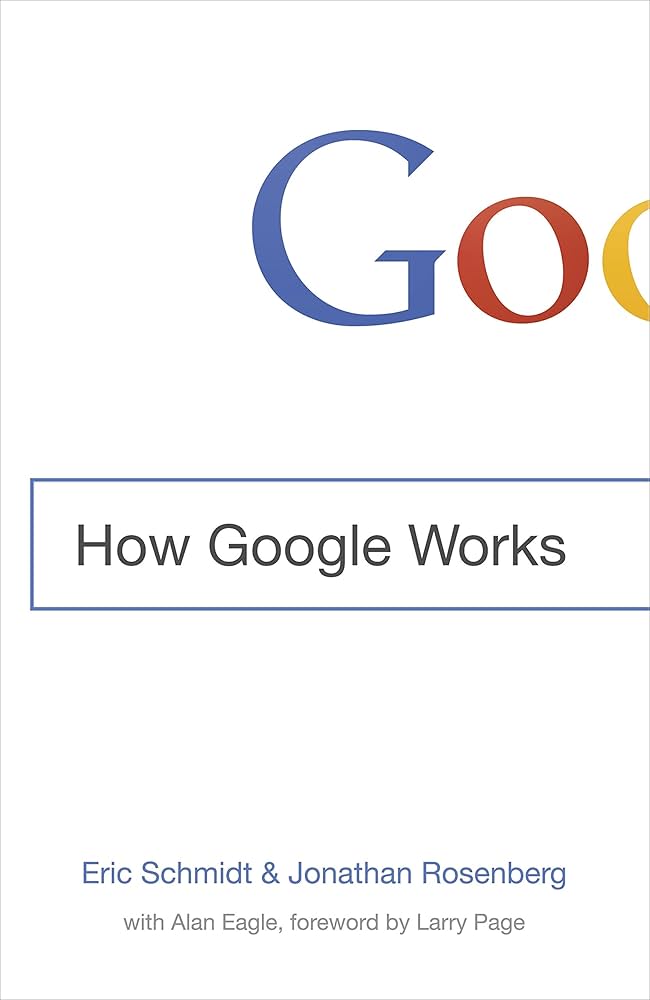
HOW GOOGLE WORKS
Author: Eric Schmidt, Jonathan Rosenberg, and Alan Eagle
The Big Idea in 30 Seconds
Eric Schmidt is Google’s former CEO, Jonathan Rosenberg is a former senior Google product executive, and Alan Eagle is a longtime Google communications leader and executive adviser.
In How Google Works, the central idea is that companies can’t succeed in fast-changing markets by relying on slow decisions, rigid plans, and layers of approval. They need talented people who understand technology, customers, and business well enough to solve difficult problems with speed.
The book’s argument is practical: hire exceptional people, organize them into small teams, give them useful information, and let strong ideas win. Leaders should provide direction and remove barriers instead of controlling every decision.
The Insight in Plain English
The internet changed how quickly products can be created, tested, copied, and improved.
In older companies, senior leaders often made plans and passed instructions down through several management layers. That approach becomes too slow when customer needs and technology change every week. By the time a large plan is approved, the market may already have moved.
The better approach is to build the company around capable employees who can make informed decisions close to the work. Leaders set the mission, standards, and priorities. Teams then use customer data, technical knowledge, and fast experiments to decide what should happen next.
Core Concepts / Frameworks / Examples
Smart creatives combine several kinds of skill.
The book uses the term “smart creative” for people who understand technology, business, and customer needs. They don’t stay inside a narrow job description. They learn quickly, question assumptions, and take responsibility for turning ideas into useful products.
Product quality should lead the strategy.
Strong marketing can create attention, but it can’t protect a weak product forever. Companies should focus first on solving an important customer problem. When the product is genuinely useful, marketing and sales have something strong to amplify.
Small teams move faster.
Large groups create more meetings, handoffs, and chances for responsibility to become unclear. Smaller teams can test ideas, make decisions, and correct mistakes faster. Leaders should keep teams compact and give one person clear ownership of the result.
Information should move openly.
Employees make better decisions when they understand the company’s goals, customer data, major risks, and current performance. Information shouldn’t be trapped inside management unless there’s a real legal, privacy, or security reason to restrict it.
Consensus isn’t always required.
Good leaders invite disagreement and listen to evidence, but they don’t wait forever for everyone to agree. Once the right people have been heard, the person responsible should make the decision and explain what happens next.
How to Apply This to Your Business
Start by defining the customer problem your company exists to solve. Give employees a clear way to judge ideas and priorities.
Next, identify decisions that need to happen faster. Remove unnecessary approvals, repeated meetings, and unclear ownership. Improve one slow process before trying to change everything.
Give every important project one clear owner. Shared work is useful, but shared accountability often leads to confusion.
Keep teams small and focused. Include only the people needed to understand the customer, build the solution, test it, and make decisions.
Hire for learning ability, not just current expertise. Look for people who ask good questions, adapt quickly, and can work across different areas of the business.
Don’t let job descriptions become walls. Create ways for employees to share useful ideas outside their formal roles.
Put product quality before promotion. Marketing can accelerate a strong product, but it can’t fix a weak one.
Talk to customers early and often. Use interviews, prototypes, and small tests to learn before making large commitments.
Build short decision cycles. Test the most uncertain assumptions first and use what you learn to guide future investments.
Create a written strategy, but update it as markets, technology, and customer behavior change. A plan should guide decisions, not prevent learning.
Make useful information easy to find while protecting sensitive data. Employees make better decisions when they understand goals, priorities, and performance.
Let evidence outrank job titles. Encourage people to challenge ideas with data and facts, and let senior leaders speak later in discussions when possible.
Separate debate from delay. Encourage disagreement before a decision, then support the chosen direction unless new evidence appears.
Keep meetings small and purposeful. Every meeting should have a clear objective and outcome.
Reward people who solve important problems, improve products, help customers, and strengthen the team.
Protect new ideas long enough to test them, and allow small failures that generate useful learning.
Avoid copying another company’s culture. Focus instead on creating an environment where capable people have information, ownership, and the ability to move quickly.
Make sure daily behavior matches stated values. Culture is defined by actions, not slogans.
Keep talented people challenged with meaningful work, honest feedback, and opportunities to grow.
Don’t confuse freedom with a lack of standards. Autonomy works best when expectations and accountability are clear.
Finally, keep changing before the market forces you to. Regularly question assumptions, simplify slow processes, and look for what a new competitor would do differently.
To read about money - https://powerwithmoney.com/
To read business book summaries - https://powerwithmoney.com/business-book-summaries
To read primary school compositions: https://sgessays.com/singapore-primary-school-compositions
To read secondary school essays: https://sgessays.com/singapore-secondary-school-essays
To read general papers essays: https://sgessays.com/general-paper-essays
To read tips on improving compositions/essays :https://sgessays.com/tips-to-improve-esssays-compositions
To read sample of letters,emails and reports (Situational Writing) - https://sgessays.com/situational-writing
To visit our main website : https://sgessays.com/
PSLE themed compositions - https://sgessays.com/100-theme-based-compositions
PSLE Continuous writing Compositions - https://sgessays.com/continuous-writing-compositions-examples
PSLE Situational writing - https://sgessays.com/situational-writing-compositions-examples
PSLE Listening comprehension - https://sgessays.com/primary-6-psle-listening-comprehension
PSLE Oral examination - https://sgessays.com/psle-english-oral-examinations
Secondary School Narrative essays - https://sgessays.com/narrative-essays
Secondary School Exposition essays https://sgessays.com/expository-essays
Secondary School Argumentative essays- https://sgessays.com/argumentative-essays
Secondary School Reflective essays - https://sgessays.com/reflective-essays
Secondary School Descriptive Essays https://sgessays.com/descriptive-essays
Junior College General Papers - https://sgessays.com/general-paper-essays
To read thrilling and bone chilling ghost stories visit : https://asiaghosts.com/
To read ghost stories related to houses/HDB: https://asiaghosts.com/house/
To read ghost stories related to school: https://asiaghosts.com/schools/
To read stories related to strange incidents : https://asiaghosts.com/strange-incidents/
To download free exam papers - https://singaporeexampapers.com/
To download free kids movies - https://www.singaporeexampapers.com/kids-movies
To download summary notes for english,math and science subjects - https://www.singaporeexampapers.com/subject-based-summary-notes
To download worksheets and resources for relief classes - https://www.singaporeexampapers.com/relief-teacher-worksheets-and-resources
To download topic based papers - https://www.singaporeexampapers.com/topic-based-practice-papers
To download subject based crossword puzzles - https://www.singaporeexampapers.com/subject-based-crossword-puzzles
To read tips and advice for Singapore exams - https://www.singaporeexampapers.com/tips-and-advice
To practice various subjects quizzes - https://www.singaporeexampapers.com/quizzes