
Little Red Book of Selling by Jeffrey Gitomer - A Summary
Jeffrey Gitomer shows why great selling isn’t about pressure or scripts, but about trust, value, confidence, and becoming the kind of salesperson customers actually want to buy from.
BUSINESS BOOK SUMMARIES
7/1/20264 min read
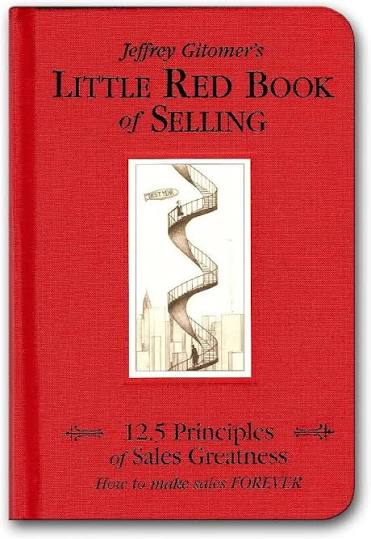
LITTLE RED BOOK OF SELLING
Author: Jeffrey Gitomer
The Big Idea in 30 Seconds
Jeffrey Gitomer is a sales trainer, speaker, author, and business educator known for teaching practical selling, customer loyalty, and personal branding.
In Little Red Book of Selling, Gitomer argues that great selling isn’t about pressure, tricks, or memorized scripts. It’s about trust, confidence, value, preparation, and becoming the kind of person customers want to buy from.
The core thesis is simple: people don’t like being sold, but they do like buying from someone they trust. If you want more sales, stop acting like a pushy closer and start becoming a useful, credible, memorable person who helps customers make smart decisions.
The Insight in Plain English
Selling isn’t something you do to people. It’s something you earn with people.
Gitomer’s main idea is that buyers care less about your pitch than your value. They want to know whether you understand them, whether you can help them, and whether they can trust you. That means the salesperson’s attitude, questions, knowledge, follow-up, and confidence all matter.
This matters because many salespeople focus too much on closing and not enough on earning the right to close. A better sales process starts earlier. It starts with preparation, personal credibility, useful ideas, and a real reason for the customer to keep listening.
Core Concepts / Frameworks / Examples
People buy from people they trust.
A customer may like your product, but trust is what lowers fear and makes the decision easier. Salespeople build trust by telling the truth, knowing their offer, following through, and caring more about the customer’s result than the short-term commission.
Value beats price pressure.
If the only thing a customer understands is the price, they’ll compare you to the cheapest option. A stronger salesperson explains the outcome, savings, confidence, convenience, safety, or growth the customer gets, so the conversation becomes about value instead of discounts.
Questions are stronger than pitches.
Weak salespeople talk too much. Strong salespeople ask better questions, listen closely, and use the answers to understand what the customer truly wants, what’s blocking the sale, and what kind of solution would actually help.
Attitude affects sales performance.
Gitomer puts a lot of weight on personal attitude because customers can feel insecurity, frustration, neediness, and indifference. A good salesperson brings confidence, energy, curiosity, and belief into the conversation without sounding fake or desperate.
Follow-up separates pros from amateurs.
Many sales are lost because the salesperson disappears, follows up weakly, or only checks in when they want the deal. Smart follow-up adds value, answers concerns, reminds the buyer why the decision matters, and keeps trust alive after the first conversation.
How to Apply This to Your Business
Start by improving how your team prepares before every sales conversation. A salesperson should know the customer’s business, likely problems, decision factors, and possible objections before the call starts.
Preparation shows respect. It also makes the conversation sharper because the salesperson doesn’t have to waste time asking basic questions they could’ve answered on their own.
Next, look at how your team explains value. If your salespeople mostly talk about features, packages, prices, or company history, they may be making the buyer do too much work. Train them to connect the offer to a clear result. What does the customer gain? What risk goes down? What problem gets easier? What cost gets avoided? What opportunity opens up?
Then improve the questions your salespeople ask. Replace generic questions with ones that reveal the real buying reason. Ask what the customer has tried, what’s not working, what success would look like, what the cost of waiting is, and what would make the decision feel safe. Better questions make customers feel understood and help salespeople avoid guessing.
Review your follow-up process. Don’t let follow-up become a lazy “just checking in” message. Every follow-up should give the customer something useful, such as a clear next step, a helpful example, a summary of the problem, a relevant proof point, or a reminder of the value they said mattered. Follow-up should move the decision forward, not just poke the buyer for an answer.
Build credibility before the sale. That could mean sharing useful content, teaching prospects something helpful, collecting strong proof, improving testimonials, or making your sales team more visible as trusted experts. Customers are more likely to buy when they already believe the salesperson understands the problem.
Also train your team to handle price without panic. If a customer says the price is too high, don’t rush into discounts. First, make sure the customer understands the value. A price objection often means the buyer doesn’t yet see enough reason to choose you. Discounting too soon can weaken trust and make your original price look inflated.
Finally, make sales a long-term relationship skill, not a one-time closing trick. A customer who trusts you can buy again, refer others, and make future sales easier. A customer who feels pressured may buy once and disappear. Gitomer’s bigger lesson is that sales greatness comes from becoming valuable before asking for the order.
To read about money - https://powerwithmoney.com/
To read business book summaries - https://powerwithmoney.com/business-book-summaries
To read primary school compositions: https://sgessays.com/singapore-primary-school-compositions
To read secondary school essays: https://sgessays.com/singapore-secondary-school-essays
To read general papers essays: https://sgessays.com/general-paper-essays
To read tips on improving compositions/essays :https://sgessays.com/tips-to-improve-esssays-compositions
To read sample of letters,emails and reports (Situational Writing) - https://sgessays.com/situational-writing
To visit our main website : https://sgessays.com/
PSLE themed compositions - https://sgessays.com/100-theme-based-compositions
PSLE Continuous writing Compositions - https://sgessays.com/continuous-writing-compositions-examples
PSLE Situational writing - https://sgessays.com/situational-writing-compositions-examples
PSLE Listening comprehension - https://sgessays.com/primary-6-psle-listening-comprehension
PSLE Oral examination - https://sgessays.com/psle-english-oral-examinations
Secondary School Narrative essays - https://sgessays.com/narrative-essays
Secondary School Exposition essays https://sgessays.com/expository-essays
Secondary School Argumentative essays- https://sgessays.com/argumentative-essays
Secondary School Reflective essays - https://sgessays.com/reflective-essays
Secondary School Descriptive Essays https://sgessays.com/descriptive-essays
Junior College General Papers - https://sgessays.com/general-paper-essays
To read thrilling and bone chilling ghost stories visit : https://asiaghosts.com/
To read ghost stories related to houses/HDB: https://asiaghosts.com/house/
To read ghost stories related to school: https://asiaghosts.com/schools/
To read stories related to strange incidents : https://asiaghosts.com/strange-incidents/
To download free exam papers - https://singaporeexampapers.com/
To download free kids movies - https://www.singaporeexampapers.com/kids-movies
To download summary notes for english,math and science subjects - https://www.singaporeexampapers.com/subject-based-summary-notes
To download worksheets and resources for relief classes - https://www.singaporeexampapers.com/relief-teacher-worksheets-and-resources
To download topic based papers - https://www.singaporeexampapers.com/topic-based-practice-papers
To download subject based crossword puzzles - https://www.singaporeexampapers.com/subject-based-crossword-puzzles
To read tips and advice for Singapore exams - https://www.singaporeexampapers.com/tips-and-advice
To practice various subjects quizzes - https://www.singaporeexampapers.com/quizzes