
Radical Candor by Kim Scott - A Summary
Kim Scott shows how leaders can build stronger teams by caring personally, challenging directly, and giving feedback that’s clear, kind, and useful before small problems become expensive ones.
BUSINESS BOOK SUMMARIES
7/1/20264 min read
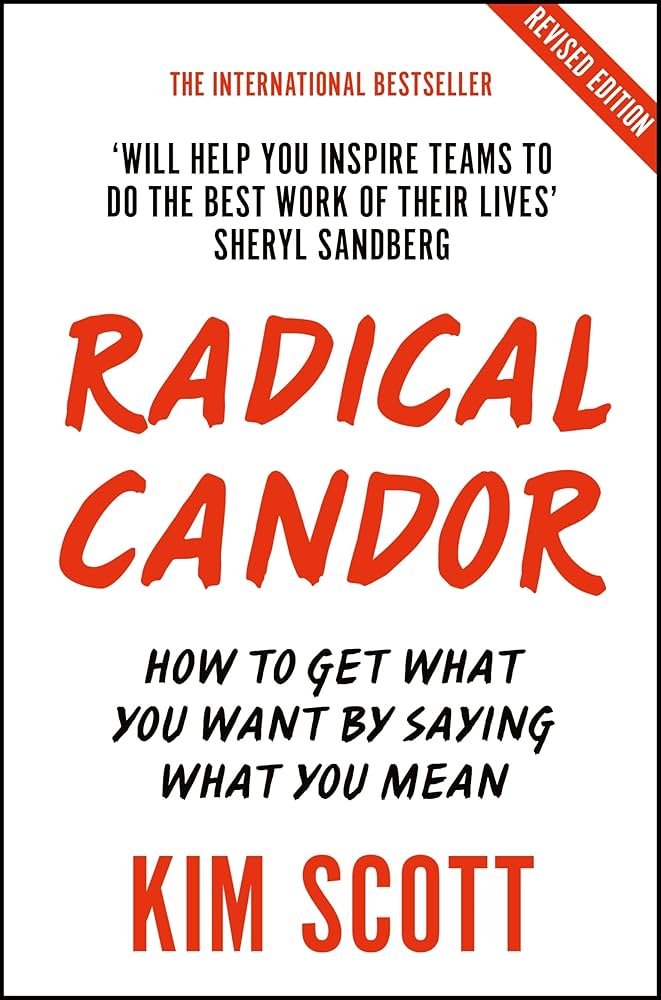

RADICAL CANDOR
Author: Kim Scott
The Big Idea in 30 Seconds
Kim Scott is a former Google and Apple leader, CEO coach, and author who teaches managers how to give better feedback and build stronger working relationships.
In Radical Candor, the core idea is that great leadership requires two things at the same time: caring personally and challenging directly. Leaders need to show people they matter while also telling them the truth about their work.
The book’s main argument is simple: feedback works best when it’s both kind and clear. If leaders avoid hard conversations, problems grow. If they challenge people without care, trust breaks. Strong managers do both.
The Insight in Plain English
Good feedback isn’t mean. Avoiding feedback isn’t nice.
Many managers make one of two mistakes. Some are too harsh, so people feel attacked instead of helped. Others are too soft, so problems stay hidden until they become bigger and more expensive. Both approaches hurt the team.
The better path is honest feedback built on trust. People are more likely to hear hard truth when they know the leader actually wants them to succeed. That’s why caring personally matters. But care without clarity can become avoidance. That’s why challenging directly matters, too.
Core Concepts / Frameworks / Examples
Radical Candor means care personally and challenge directly.
The Radical Candor framework says the best feedback lives at the intersection of personal care and clear challenge. A manager should be direct enough to help someone improve, but human enough that the person doesn’t feel dismissed or attacked.
Ruinous empathy avoids the truth.
This happens when a manager wants to be nice, so they soften or skip important feedback. It may feel kind in the moment, but it leaves people confused, lets problems continue, and can make future consequences feel unfair.
Obnoxious aggression is direct without care.
This is blunt feedback that may contain useful information but lands badly because it feels disrespectful. It can create fear, defensiveness, and resentment, even when the point itself is technically correct.
Manipulative insincerity destroys trust.
This is what happens when managers neither care personally nor challenge directly. They dodge the real issue, say what sounds convenient, or manage through politics instead of honesty, which makes teams less safe and less effective.
Praise and criticism both need to be specific.
Useful feedback focuses on the behavior, the impact, and what should happen next. “Great job” is pleasant but vague. “Your customer summary made the decision easier because it showed the risk clearly” teaches people what to repeat.
How to Apply This to Your Business
Start by separating kindness from avoidance. If someone’s work needs to improve and you don’t tell them, you’re not protecting them. You’re protecting yourself from an uncomfortable conversation. The team still pays the price.
Next, build trust before hard feedback is needed. Managers shouldn’t wait for a problem to prove they care. Regular one-on-ones, honest praise, curiosity about people’s goals, and follow-through on promises make direct feedback easier to hear later.
Then make feedback specific. Don’t say, “You need to communicate better.” Say what happened, why it mattered, and what needs to change. For example: “The client didn’t get the revised timeline until Friday, which made us look behind. Next time, send the update as soon as the deadline moves.” That’s clear, fair, and useful.
Give feedback quickly. Small corrections are easier than major confrontations. If a manager waits three months to mention a problem, the employee may feel blindsided. Quick feedback helps people adjust before the issue becomes a pattern.
Ask for criticism before giving it. A manager who invites feedback shows the team that honesty goes both ways. This can be as simple as saying, “What’s one thing I could do better as your manager?” Then listen without arguing. If leaders punish honesty, people will stop offering it.
Use praise as a teaching tool. Good praise isn’t flattery. It shows people which behaviors matter. When someone handles a customer issue well, closes a difficult project, or improves a process, explain what they did and why it helped. Specific praise builds confidence and repeats good behavior.
Don’t confuse direct feedback with public embarrassment. Some praise can be public, but criticism usually belongs in private. The goal is to help the person improve, not perform toughness for the rest of the team.
Train managers to spot the four feedback traps. If they’re being too soft, they may be falling into ruinous empathy. If they’re being harsh, they may be drifting into obnoxious aggression. If they’re avoiding the issue or playing politics, they may be showing manipulative insincerity. The goal is to return to care and clarity.
Finally, make feedback normal. If feedback only happens during annual reviews or after something goes wrong, people will fear it. If it happens regularly, clearly, and respectfully, it becomes part of how the team improves.
To read about money - https://powerwithmoney.com/
To read business book summaries - https://powerwithmoney.com/business-book-summaries
To read primary school compositions: https://sgessays.com/singapore-primary-school-compositions
To read secondary school essays: https://sgessays.com/singapore-secondary-school-essays
To read general papers essays: https://sgessays.com/general-paper-essays
To read tips on improving compositions/essays :https://sgessays.com/tips-to-improve-esssays-compositions
To read sample of letters,emails and reports (Situational Writing) - https://sgessays.com/situational-writing
To visit our main website : https://sgessays.com/
PSLE themed compositions - https://sgessays.com/100-theme-based-compositions
PSLE Continuous writing Compositions - https://sgessays.com/continuous-writing-compositions-examples
PSLE Situational writing - https://sgessays.com/situational-writing-compositions-examples
PSLE Listening comprehension - https://sgessays.com/primary-6-psle-listening-comprehension
PSLE Oral examination - https://sgessays.com/psle-english-oral-examinations
Secondary School Narrative essays - https://sgessays.com/narrative-essays
Secondary School Exposition essays https://sgessays.com/expository-essays
Secondary School Argumentative essays- https://sgessays.com/argumentative-essays
Secondary School Reflective essays - https://sgessays.com/reflective-essays
Secondary School Descriptive Essays https://sgessays.com/descriptive-essays
Junior College General Papers - https://sgessays.com/general-paper-essays
To read thrilling and bone chilling ghost stories visit : https://asiaghosts.com/
To read ghost stories related to houses/HDB: https://asiaghosts.com/house/
To read ghost stories related to school: https://asiaghosts.com/schools/
To read stories related to strange incidents : https://asiaghosts.com/strange-incidents/
To download free exam papers - https://singaporeexampapers.com/
To download free kids movies - https://www.singaporeexampapers.com/kids-movies
To download summary notes for english,math and science subjects - https://www.singaporeexampapers.com/subject-based-summary-notes
To download worksheets and resources for relief classes - https://www.singaporeexampapers.com/relief-teacher-worksheets-and-resources
To download topic based papers - https://www.singaporeexampapers.com/topic-based-practice-papers
To download subject based crossword puzzles - https://www.singaporeexampapers.com/subject-based-crossword-puzzles
To read tips and advice for Singapore exams - https://www.singaporeexampapers.com/tips-and-advice
To practice various subjects quizzes - https://www.singaporeexampapers.com/quizzes