
The Effective Executive by Peter Drucker - A Summary
Peter Drucker shows how effective executives turn limited time into meaningful results by setting clear priorities, making sound decisions, and focusing on the work that matters most.
BUSINESS BOOK SUMMARIES
7/1/20265 min read
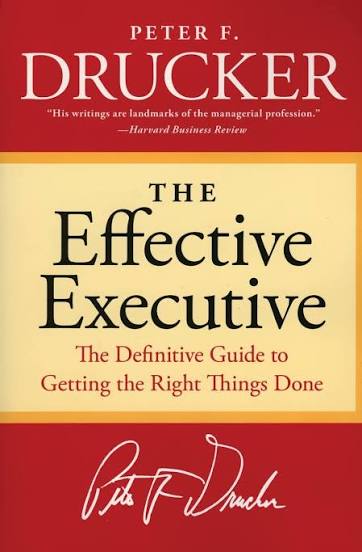
THE EFFECTIVE EXECUTIVE
Author: Peter Drucker
The Big Idea in 30 Seconds
Peter Drucker was a management thinker, author, and teacher whose work helped shape modern ideas about leadership, knowledge work, and organizational effectiveness.
In The Effective Executive, the central idea is that effectiveness isn’t a personality trait. It’s a set of habits that can be learned. Executives become more effective when they manage their time, focus on contribution, build on strengths, set clear priorities, and make decisions carefully.
This edition includes a foreword by Zachary First and an afterword by Jim Collins. They add modern context, but Drucker remains the sole author and the book’s ideas remain the main focus.
The Insight in Plain English
Being busy isn’t the same as being effective.
Executives often spend their days answering messages, attending meetings, solving urgent problems, and reacting to other people’s requests. They may work hard without creating much value because their time is being controlled by events instead of priorities.
The book argues that effectiveness begins by asking what results the organization actually needs. Once that’s clear, the executive can protect time, focus on a small number of important contributions, use people’s strengths, and make decisions that move the organization forward.
I
Core Concepts / Frameworks / Examples
Know where your time goes.
Most executives don’t use time as carefully as they think. Drucker recommends recording how time is actually spent before trying to improve it. Once the record is visible, leaders can remove low-value work, combine repeated tasks, delegate where appropriate, and protect larger blocks for important thinking.
Focus on contribution.
Effective executives ask what they can contribute to the organization’s results. This moves attention away from personal activity, title, and effort. A leader’s contribution might be better decisions, stronger people, clearer priorities, improved customer value, or a system that keeps working without constant supervision.
Build on strengths.
The goal isn’t to create perfect people. It’s to place people where their strengths can produce meaningful results. Effective leaders know what employees do well, design roles around those abilities, and avoid letting one weakness erase the value of several major strengths.
Concentrate on a few priorities.
Important work requires focus. When leaders spread time and money across too many projects, none receives enough attention to succeed. Effective executives decide what matters most, complete or abandon lower-value work, and protect the top priorities from constant interruption.
Make decisions through a clear process.
A strong decision begins by identifying the real problem, defining the conditions the answer must satisfy, considering alternatives, and deciding who will take action. The decision isn’t complete until responsibility, deadlines, and feedback are clear.
How to Apply This to Your Business
Start by tracking your time for two weeks. Don’t rely on memory. Record meetings, calls, email, planning, customer work, approvals, and interruptions. Simple categories will reveal where your time actually goes.
Review the record and remove low-value activities. Some meetings can disappear. Some reports no longer matter. Some approvals exist only because they always have. Eliminate work that doesn’t improve customers, employees, compliance, or results.
Next, identify tasks that someone else can handle well. Delegation isn’t about offloading unwanted work. It’s about assigning responsibility to the right person so leaders can focus on decisions that truly require their attention.
Protect larger blocks of time. Strategy, hiring, planning, writing, and major decisions rarely happen well in scattered fifteen-minute intervals. Reserve uninterrupted time for high-impact work.
Define your contribution. Write down the three most important results your role should produce over the next six to twelve months. Focus on outcomes, not activities. “Attend sales meetings” is an activity. “Improve conversion rates” is a result.
Connect those results to what customers, employees, investors, or partners need from your role. Then turn them into visible priorities. Compare your calendar and budget with those priorities. If the most important work gets the least attention, the plan isn’t real.
Avoid trying to improve everything at once. Choose a small number of priorities, communicate them clearly, and explain what will receive attention now, what will wait, and what the company will stop doing.
Create a quarterly “stop doing” review. Projects, reports, services, and meetings often continue long after their value fades. Ask whether you would start each activity today. If not, redesign it or end it.
Build roles around strengths. Assign work based on who is most likely to produce an excellent result, not who has the fewest weaknesses. Help employees understand where they create the most value and use those strengths more often.
Manage weaknesses realistically. Some can be improved through training or support. Others are better addressed by adjusting responsibilities or pairing people with complementary strengths. Likewise, don’t promote someone simply because they excelled in a different role. Define the strengths the new position requires first.
Use meetings to produce decisions or useful information. Every meeting should have a purpose, an owner, and a clear outcome. If the goal is only to share updates, a written report may be enough.
End meetings by confirming who will do what and by when. A decision without ownership and a deadline is only a discussion.
Improve decision quality by defining the real problem. Recurring issues are often symptoms rather than root causes. Falling sales, for example, could stem from demand, targeting, service, pricing, product quality, or follow-up. Solving the wrong problem wastes time.
Decide whether a problem is common or unique. Common problems need systems, policies, or rules.
Unique problems may require one-time responses. Treating recurring issues as exceptions forces leaders to solve the same problem repeatedly.
Before comparing options, define what the decision must accomplish. Consider factors such as budget, timing, customer impact, legal requirements, quality standards, and staffing capacity.
Evaluate more than one serious option. Comparing alternatives exposes assumptions and strengthens the final choice. Encourage thoughtful disagreement before major decisions so risks and missing information surface early.
Once a decision is made, turn it into action. Assign responsibility, define the next step, set a deadline, and establish a review point. Good decisions often need adjustment as new information appears.
Focus on opportunities, not just problems. Solving problems restores performance; opportunities create growth, stronger teams, better products, and competitive advantages. Reserve time for opportunity work and review key opportunities alongside major challenges.
Communicate priorities repeatedly. Employees struggle to focus when everything is treated as urgent.
Explain what matters most, what success looks like, and which tradeoffs the company is willing to make.
Measure effectiveness through results, not activity. Long hours and full calendars don’t prove progress.
Review whether customers are better served, decisions are stronger, people are developing, and important goals are advancing.
Finally, treat effectiveness as an ongoing practice. Time management, contribution, strengths, priorities, and decision-making improve through regular review and consistent application.
To read about money - https://powerwithmoney.com/
To read business book summaries - https://powerwithmoney.com/business-book-summaries
To read primary school compositions: https://sgessays.com/singapore-primary-school-compositions
To read secondary school essays: https://sgessays.com/singapore-secondary-school-essays
To read general papers essays: https://sgessays.com/general-paper-essays
To read tips on improving compositions/essays :https://sgessays.com/tips-to-improve-esssays-compositions
To read sample of letters,emails and reports (Situational Writing) - https://sgessays.com/situational-writing
To visit our main website : https://sgessays.com/
PSLE themed compositions - https://sgessays.com/100-theme-based-compositions
PSLE Continuous writing Compositions - https://sgessays.com/continuous-writing-compositions-examples
PSLE Situational writing - https://sgessays.com/situational-writing-compositions-examples
PSLE Listening comprehension - https://sgessays.com/primary-6-psle-listening-comprehension
PSLE Oral examination - https://sgessays.com/psle-english-oral-examinations
Secondary School Narrative essays - https://sgessays.com/narrative-essays
Secondary School Exposition essays https://sgessays.com/expository-essays
Secondary School Argumentative essays- https://sgessays.com/argumentative-essays
Secondary School Reflective essays - https://sgessays.com/reflective-essays
Secondary School Descriptive Essays https://sgessays.com/descriptive-essays
Junior College General Papers - https://sgessays.com/general-paper-essays
To read thrilling and bone chilling ghost stories visit : https://asiaghosts.com/
To read ghost stories related to houses/HDB: https://asiaghosts.com/house/
To read ghost stories related to school: https://asiaghosts.com/schools/
To read stories related to strange incidents : https://asiaghosts.com/strange-incidents/
To download free exam papers - https://singaporeexampapers.com/
To download free kids movies - https://www.singaporeexampapers.com/kids-movies
To download summary notes for english,math and science subjects - https://www.singaporeexampapers.com/subject-based-summary-notes
To download worksheets and resources for relief classes - https://www.singaporeexampapers.com/relief-teacher-worksheets-and-resources
To download topic based papers - https://www.singaporeexampapers.com/topic-based-practice-papers
To download subject based crossword puzzles - https://www.singaporeexampapers.com/subject-based-crossword-puzzles
To read tips and advice for Singapore exams - https://www.singaporeexampapers.com/tips-and-advice
To practice various subjects quizzes - https://www.singaporeexampapers.com/quizzes