
Thinking, Fast and Slow by Daniel Kahneman - A Summary
Daniel Kahneman reveals how fast intuition and slow reasoning shape every decision, showing why even smart people make predictable mistakes and how clearer thinking can improve judgment.
BUSINESS BOOK SUMMARIES
7/1/20264 min read
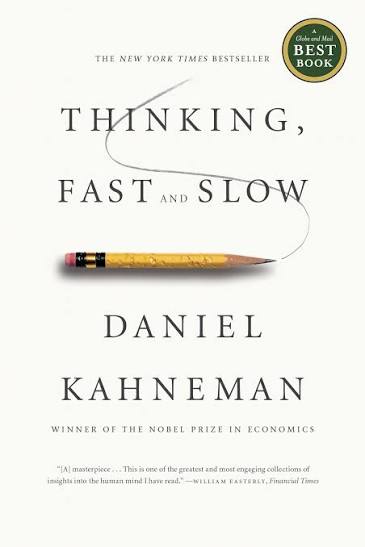
THINKING, FAST AND SLOW
Author: Daniel Kahneman
The Big Idea in 30 Seconds
Daniel Kahneman was a Nobel Prize-winning psychologist whose work changed how people understand judgment, decision-making, risk, and human error.
In Thinking, Fast and Slow, the core idea is that the mind uses two different systems. One is fast, automatic, and emotional. The other is slower, more careful, and more logical.
The book’s main argument is simple: people don’t make decisions as rationally as they think they do. Even smart people use shortcuts, miss important facts, and make predictable mistakes unless they design better ways to think.
The Insight in Plain English
Your brain is built for speed, not perfect judgment.
Fast thinking helps you move through life without analyzing every tiny choice. It lets you read faces, spot danger, answer simple questions, and make quick calls. That’s useful. But fast thinking also jumps to conclusions, trusts easy answers, and creates confidence before the facts are fully checked.
This matters in business because many expensive mistakes start as mental shortcuts. Leaders overtrust first impressions, ignore base rates, chase losses, follow confident voices, and make plans based on best-case stories. Better judgment starts when you stop assuming your first answer is always the best one.
Core Concepts / Frameworks / Examples
System 1 is fast, useful, and risky.
System 1 handles quick, automatic thinking. It helps people act fast, but it also creates snap judgments, assumptions, and emotional reactions before slower reasoning can check them.
System 2 is slower, but it catches mistakes.
System 2 handles effortful thinking, like analysis, planning, math, and careful comparison. It takes more energy, so people often avoid using it unless a decision feels important or the process forces them to slow down.
Cognitive biases make errors predictable.
A cognitive bias is a repeated thinking error that affects judgment. In business, biases can show up as overconfidence, anchoring on the first number, trusting recent events too much, or assuming a good story must be true.
Losses feel stronger than gains.
People often feel the pain of losing more than the pleasure of winning. This can make leaders hold onto bad projects, avoid smart risks, or make emotional decisions just to prevent admitting a loss.
Planning works better with outside views.
People often build plans from the inside, using hopes, goals, and best-case assumptions. A better approach is to look at similar projects first, study what actually happened, and use those results to make a more realistic forecast.
How to Apply This to Your Business
Start by identifying which decisions need slower thinking. Not every decision deserves a long meeting, but some choices are too important for instinct alone. Hiring, pricing, major spending, strategy, product launches, partnerships, and big customer commitments should have a process that slows people down.
Next, separate confidence from evidence. A person can sound certain and still be wrong. Before making a major decision, ask what facts support the claim, what facts might challenge it, and what would change your mind. This helps protect the team from confident guesses dressed up as insight.
Use base rates before forecasts. If you’re launching a project, don’t only ask, “How long do we think this will take?” Ask, “How long have similar projects taken before?” If you’re entering a market, don’t only ask, “Why can we win?” Ask, “How often do companies like ours succeed here?” The outside view helps reduce fantasy planning.
Watch for anchoring. The first number in a negotiation, budget, valuation, or forecast can shape every number that comes after it. Before reacting to an anchor, create your own estimate based on evidence. This helps you avoid being pulled toward a number just because it came first.
Build decision checklists. A checklist doesn’t make people less smart. It helps smart people avoid common mistakes. Before a major call, include questions like: What are we assuming? What’s the base rate? What evidence are we ignoring? Who disagrees? What happens if we’re wrong? What would we do if this were someone else’s decision?
Create room for disagreement. Fast thinking loves simple stories and group agreement. Strong teams make it safe for someone to say, “I’m not sure this adds up.” You don’t need endless debate, but you do need enough challenge to catch weak logic before it becomes an expensive mistake.
Be careful with losses. If a project is failing, don’t ask only how much you’ve already invested. Ask whether you’d start the project today knowing what you now know. This helps reduce the sunk cost trap, where companies keep spending because quitting feels painful.
Finally, improve decisions by improving the environment. People don’t become perfectly rational just because they try harder. Better judgment comes from better systems: clearer data, slower processes for big choices, honest feedback, outside views, checklists, and a culture that values truth over ego.
To read about money - https://powerwithmoney.com/
To read business book summaries - https://powerwithmoney.com/business-book-summaries
To read primary school compositions: https://sgessays.com/singapore-primary-school-compositions
To read secondary school essays: https://sgessays.com/singapore-secondary-school-essays
To read general papers essays: https://sgessays.com/general-paper-essays
To read tips on improving compositions/essays :https://sgessays.com/tips-to-improve-esssays-compositions
To read sample of letters,emails and reports (Situational Writing) - https://sgessays.com/situational-writing
To visit our main website : https://sgessays.com/
PSLE themed compositions - https://sgessays.com/100-theme-based-compositions
PSLE Continuous writing Compositions - https://sgessays.com/continuous-writing-compositions-examples
PSLE Situational writing - https://sgessays.com/situational-writing-compositions-examples
PSLE Listening comprehension - https://sgessays.com/primary-6-psle-listening-comprehension
PSLE Oral examination - https://sgessays.com/psle-english-oral-examinations
Secondary School Narrative essays - https://sgessays.com/narrative-essays
Secondary School Exposition essays https://sgessays.com/expository-essays
Secondary School Argumentative essays- https://sgessays.com/argumentative-essays
Secondary School Reflective essays - https://sgessays.com/reflective-essays
Secondary School Descriptive Essays https://sgessays.com/descriptive-essays
Junior College General Papers - https://sgessays.com/general-paper-essays
To read thrilling and bone chilling ghost stories visit : https://asiaghosts.com/
To read ghost stories related to houses/HDB: https://asiaghosts.com/house/
To read ghost stories related to school: https://asiaghosts.com/schools/
To read stories related to strange incidents : https://asiaghosts.com/strange-incidents/
To download free exam papers - https://singaporeexampapers.com/
To download free kids movies - https://www.singaporeexampapers.com/kids-movies
To download summary notes for english,math and science subjects - https://www.singaporeexampapers.com/subject-based-summary-notes
To download worksheets and resources for relief classes - https://www.singaporeexampapers.com/relief-teacher-worksheets-and-resources
To download topic based papers - https://www.singaporeexampapers.com/topic-based-practice-papers
To download subject based crossword puzzles - https://www.singaporeexampapers.com/subject-based-crossword-puzzles
To read tips and advice for Singapore exams - https://www.singaporeexampapers.com/tips-and-advice
To practice various subjects quizzes - https://www.singaporeexampapers.com/quizzes