
Tiny Habits by BJ Fogg - A Summary
BJ Fogg shows how tiny, easy-to-repeat behaviors can create lasting change by making habits feel simple, rewarding, and built into daily life.
BUSINESS BOOK SUMMARIES
7/1/20264 min read
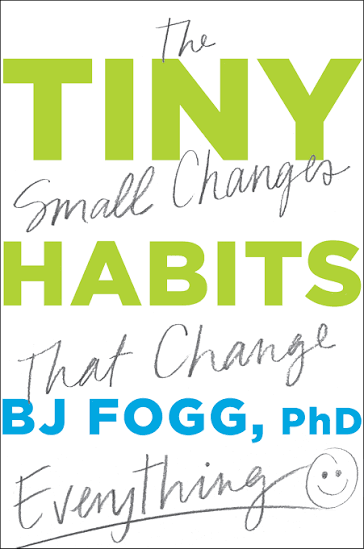
TINY HABITS
Author: BJ Fogg
The Big Idea in 30 Seconds
BJ Fogg is a Stanford behavior scientist and founder of the Behavior Design Lab, where he studies how people change their behavior.
In Tiny Habits, Fogg argues that lasting change doesn’t come from huge goals, guilt, or forcing yourself to be more disciplined. It comes from making new behaviors so small and easy that they fit naturally into your life.
The core thesis is simple: if you want better habits, don’t start by trying harder. Start by making the behavior tiny, attach it to something you already do, and celebrate the win so your brain wants to repeat it.
The Insight in Plain English
Big change usually starts smaller than people think.
Fogg’s main idea is that behavior happens when three things come together: motivation, ability, and a prompt. This is often called the Fogg Behavior Model. If a habit doesn’t happen, it’s usually because one of those three pieces is missing.
This matters because most people blame themselves when change doesn’t stick. They think they’re lazy, weak, or undisciplined. Fogg’s point is more useful: the problem is usually the design. Make the behavior easier, place it after a reliable prompt, and reward the small win. That’s how change becomes repeatable.
Core Concepts / Frameworks / Examples
Behavior needs motivation, ability, and a prompt.
Fogg’s model says a behavior happens when someone wants to do it, can do it, and gets prompted at the right moment. If any piece is missing, the habit usually fails, so leaders and individuals should fix the design before blaming motivation.
Tiny is powerful because tiny is doable.
A habit should start so small that it feels almost impossible to fail. Instead of “work out for an hour,” start with one push-up after brushing your teeth. The goal isn’t to stay tiny forever. It’s to make starting easy enough that the behavior becomes automatic.
Prompts work best when they’re already part of life.
Fogg recommends attaching a new habit to an existing routine. For example, “After I pour my morning coffee, I’ll write down one priority.” The existing action becomes the trigger, which makes the new habit easier to remember.
Feeling successful builds momentum
People change best by feeling good, not by feeling bad. A small celebration after a habit, like saying “done” or taking a second to feel proud, helps the brain connect the behavior with success and makes repetition more likely.
Environment beats willpower.
If a habit is hard to do, people won’t do it for long. Better habit design removes friction, puts tools in the right place, and makes the desired action easier than the old default.
How to Apply This to Your Business
Start by choosing one behavior you want to improve. Don’t begin with a vague goal like “be more productive” or “improve customer service.” Pick one clear action. For example, “send one follow-up after every sales call,” “review the top support issue each morning,” or “write down the next step before leaving a meeting.”
Next, make the behavior tiny. If the action feels heavy, people will avoid it. A sales manager might want reps to update the CRM after every call, but the tiny version could be entering one next step before closing the tab. A team leader might want better meeting notes, but the tiny version could be writing one sentence about the decision made.
Then attach the habit to something that already happens. This is the anchor. “After I finish a sales call, I’ll record the next step.” “After the morning standup, I’ll send one blocker to the team channel.” “After I open my laptop, I’ll check the top priority for the day.” The stronger the existing routine, the easier the new habit becomes.
After that, reduce friction. Make the behavior easy to do in the moment. Put the form, checklist, template, app, document, or tool exactly where people need it. If someone has to search, log in twice, ask for access, or remember a long process, the habit will break down.
Add a quick feeling of success. This may sound soft, but it matters. People repeat behaviors that feel good. A manager can reinforce a new habit by noticing it, thanking people for doing it, or showing how it helped the team. For personal habits, even a quick mental “nice, that’s done” can help the behavior stick.
Use this approach for customer behavior, too. If you want customers to use a product, book a follow-up, complete onboarding, leave a review, or renew, make the action small and clear. Give them the right prompt at the right time. Remove steps. Help them feel progress quickly.
Don’t depend on motivation alone. Motivation rises and falls. A good system works even when people are busy, tired, distracted, or not in the mood. That’s why tiny habits are useful in business. They turn important behaviors into repeatable defaults instead of heroic efforts.
Finally, scale only after the habit works. Once people are doing the tiny version reliably, you can grow it. One follow-up note can become a better sales process. One daily customer insight can become a stronger product feedback loop. One tiny planning habit can become better team execution. Small wins are not the end goal. They’re the safest starting point.
To read about money - https://powerwithmoney.com/
To read business book summaries - https://powerwithmoney.com/business-book-summaries
To read primary school compositions: https://sgessays.com/singapore-primary-school-compositions
To read secondary school essays: https://sgessays.com/singapore-secondary-school-essays
To read general papers essays: https://sgessays.com/general-paper-essays
To read tips on improving compositions/essays :https://sgessays.com/tips-to-improve-esssays-compositions
To read sample of letters,emails and reports (Situational Writing) - https://sgessays.com/situational-writing
To visit our main website : https://sgessays.com/
PSLE themed compositions - https://sgessays.com/100-theme-based-compositions
PSLE Continuous writing Compositions - https://sgessays.com/continuous-writing-compositions-examples
PSLE Situational writing - https://sgessays.com/situational-writing-compositions-examples
PSLE Listening comprehension - https://sgessays.com/primary-6-psle-listening-comprehension
PSLE Oral examination - https://sgessays.com/psle-english-oral-examinations
Secondary School Narrative essays - https://sgessays.com/narrative-essays
Secondary School Exposition essays https://sgessays.com/expository-essays
Secondary School Argumentative essays- https://sgessays.com/argumentative-essays
Secondary School Reflective essays - https://sgessays.com/reflective-essays
Secondary School Descriptive Essays https://sgessays.com/descriptive-essays
Junior College General Papers - https://sgessays.com/general-paper-essays
To read thrilling and bone chilling ghost stories visit : https://asiaghosts.com/
To read ghost stories related to houses/HDB: https://asiaghosts.com/house/
To read ghost stories related to school: https://asiaghosts.com/schools/
To read stories related to strange incidents : https://asiaghosts.com/strange-incidents/
To download free exam papers - https://singaporeexampapers.com/
To download free kids movies - https://www.singaporeexampapers.com/kids-movies
To download summary notes for english,math and science subjects - https://www.singaporeexampapers.com/subject-based-summary-notes
To download worksheets and resources for relief classes - https://www.singaporeexampapers.com/relief-teacher-worksheets-and-resources
To download topic based papers - https://www.singaporeexampapers.com/topic-based-practice-papers
To download subject based crossword puzzles - https://www.singaporeexampapers.com/subject-based-crossword-puzzles
To read tips and advice for Singapore exams - https://www.singaporeexampapers.com/tips-and-advice
To practice various subjects quizzes - https://www.singaporeexampapers.com/quizzes